
Study planning: why we start by asking where you want to end up
School information is easy to find; knowing which option suits you is not. Working back from career direction and existing experience.
Home / Study
Study in New ZealandGetting a child into a school here isn't the hard part. The hard part is whether that choice leads where you want it to — back home for university, or staying on to work and settle. The programme and the level decide what visa is available years later.
When I first decided to take the children abroad to study, I hesitated for a long time.
The United States, Australia, or New Zealand?
Because my plan was one mother taking two children to live and study overseas, what I cared about beyond the schooling was safety, personal security, racism, and whether a mother alone with two children could feel at ease living there.
After weighing a great many things, I chose New Zealand.
From Mrs Chen's letter | Read it in full →The thing parents most often get wrong: the school year here starts in February, and there are no separate primary and secondary numbering systems — it runs continuously from Year 1 to Year 13. Where your child is placed usually won't line up exactly with the year they were in at home.
| New Zealand | Roughly equivalent | Age (approx.) | Student visa and parents | What matters at this stage |
|---|---|---|---|---|
| Year 1–6 | Primary years 1–5 | 5–10 | A student visa is required, and at this age aparent normally accompanies; the parent may apply for a guardian visa. | Language is absorbed fastest here — and lost fastest too. Decide early how Chinese will be kept up at home. |
| Year 7–8 | Years 6–7 | 11–12 | Most schools still require a parent or a designated guardian. | A transition stage. Moving now tends to be smoother, and there is still time to build the English foundation. |
| Year 9–11 | Years 8–10 | 13–15 | A homestay or school boarding becomes possible; a parent doesn't necessarily need to stay long-term. | NCEA subject choices begin here, and they affect which university programmes remain open. |
| Year 12–13 | Years 11–12 | 16–18 | A student visa; guardian eligibility changes once the student is an adult. | NCEA Level 2 and 3 results decide university entry directly.This is the riskiest time to move schools; we don't recommend transferring as late as Year 13. |
| Tertiary | University / postgraduate | 18+ | A student visa; if eligible, a post-study work visa. | The programme decides both work-visa eligibility and the job market you graduate into.This is the most expensive decision on the whole route. |
Items with a dotted underline are policy settings that change as INZ publishes them, and guardianship rules differ between schools. The school's and INZ's requirements at the time apply.
What matters is completely different at each stage. Start with whichever is closest.
The stage where immersion works best — but a parent has to come too. Settle these first: how long you can stay, how the household income will work, and how much Chinese you want kept.
Boarding becomes possible. What matters is matching the zone and the school's character, and the NCEA subjects — the wrong ones close university options outright. We look ahead to that end of it with you.
We weigh three things at once: the ranking, work-visa eligibility after graduating, and how that field actually employs here. Missing any one of them makes the choice risky.
The most practical step for families still deciding. Two weeks to three months here, then decide whether to commit.
Ranking is one factor, and usually not the most important one.
We work with more than a hundred schools, from primary to university and across both islands; these are the ones we're asked about most. What can actually be applied for, and the places available, are as published by each school at the time. Which school suits your child depends on age, temperament, English and your family's arrangements — not on a ranking.
| School | QS 2026 world rank | Notes | Website |
|---|---|---|---|
| University of Auckland University of Auckland |
#65 | New Zealand's highest-ranked university; the business school holds AACSB, EQUIS and AMBA accreditation. | Website → |
| University of Otago University of Otago |
#197 | The country's oldest university; medicine, dentistry and health sciences are traditional strengths. | Website → |
| Massey University Massey University |
#230 | Known for agriculture, veterinary science and aviation, with campuses in Palmerston North, Auckland and Wellington. | Website → |
| Victoria University of Wellington Victoria University of Wellington |
#240 | In the capital; strong in law, the humanities and public policy. | Website → |
| University of Canterbury University of Canterbury |
#261 | The South Island's engineering and research centre, with one of the country's largest engineering faculties. | Website → |
| University of Waikato University of Waikato |
#281 | Triple-accredited management school, with active development in computing and environmental science. | Website → |
| Lincoln University Lincoln University |
#407 | The southern hemisphere's oldest agricultural institution, focused on land, agribusiness and environmental science. | Website → |
Ranks are overall world positions in the QS World University Rankings 2026, checked in September 2026. Rankings are updated annually; refer to QS's own publication. A ranking is one reference point; fit with the programme and the pathway afterwards usually matter more.
| School | Notes | Website |
|---|---|---|
| St Heliers School State primary · East Auckland |
The principal and international director explained to us in person how international students are looked after; the interview is below. | Website → |
| Red Beach School State primary · Auckland North Shore |
Small classes, with an emphasis on community involvement and the environment. | Website → |
| Ahutoetoe School State primary · Auckland North Shore |
Opened in 2023, serving the fast-growing Milldale community, with a learning support unit. | Website → |
| Rosmini College Private boys' secondary · Auckland North Shore |
A Catholic boys' school; we filmed two visits there, both below. | Website → |
| Kingsway School Christian school · Auckland North Shore |
Primary through secondary in one school, with an emphasis on individual learning and student development. | Website → |
| Orewa College State secondary · Auckland North Shore |
Years 7 to 13, with an emphasis on student leadership. | Website → |
| Wentworth College Private school · Gulf Harbour, Auckland |
Cambridge International curriculum, taught in small classes. | Website → |
| ACG Schools Private school group · Auckland and elsewhere |
Early childhood through secondary in one system, offering the Cambridge International curriculum. | Website → |
This list isn't exhaustive, and it doesn't mean we can't apply elsewhere. Tell us your child's age, their English and what matters to you, and we'll come back with two or three specific options and the differences between them.
We hold relationships with more than a hundred schools here — primary, secondary, universities, polytechnics and language schools. Admissions information and availability come to us directly, not through a third party.
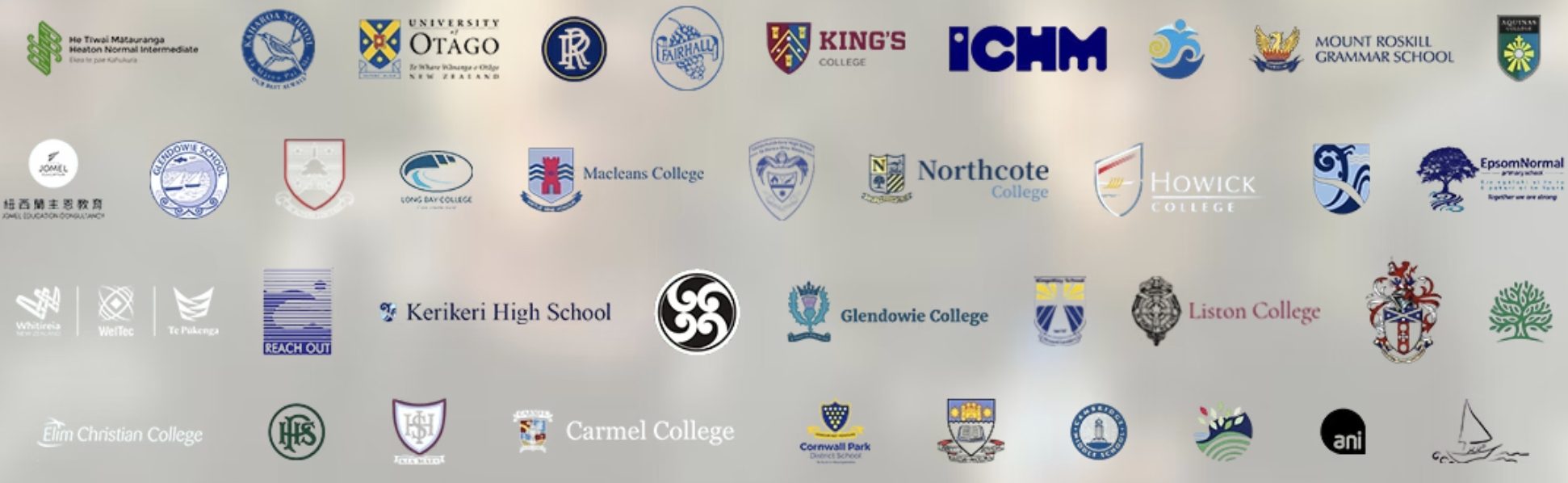
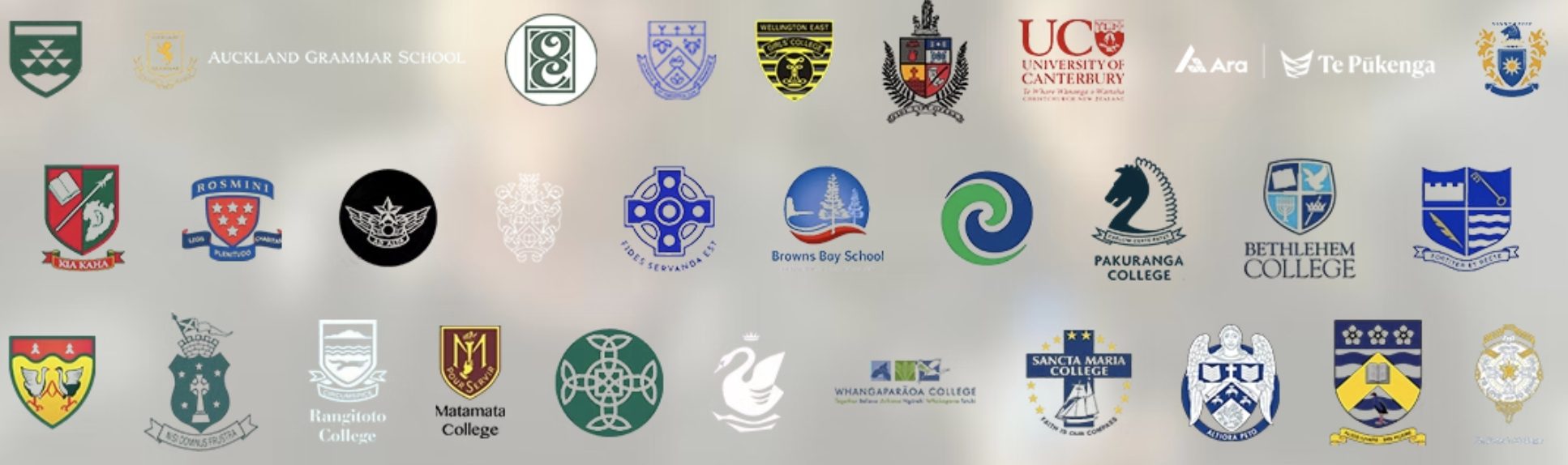
A partial list. What can be applied for, and the places available, are as published by each school at the time.
What a campus is really like, and how a school looks after international students, are hard to convey in writing. These were filmed after we walked in and talked to the principals and international directors.
Filmed by us on site or supplied by the schools themselves. The content reflects each speaker's own experience and each school's circumstances at the time; courses, places and fees are as published by each school at the time you apply. The player loads only when you click. More videos in the video section of the blog.
Choosing schools, choosing an adviser, and a parent's experience. Read these and the consultation can skip the basics.
School information is easy to find; knowing which option suits you is not. Working back from career direction and existing experience.
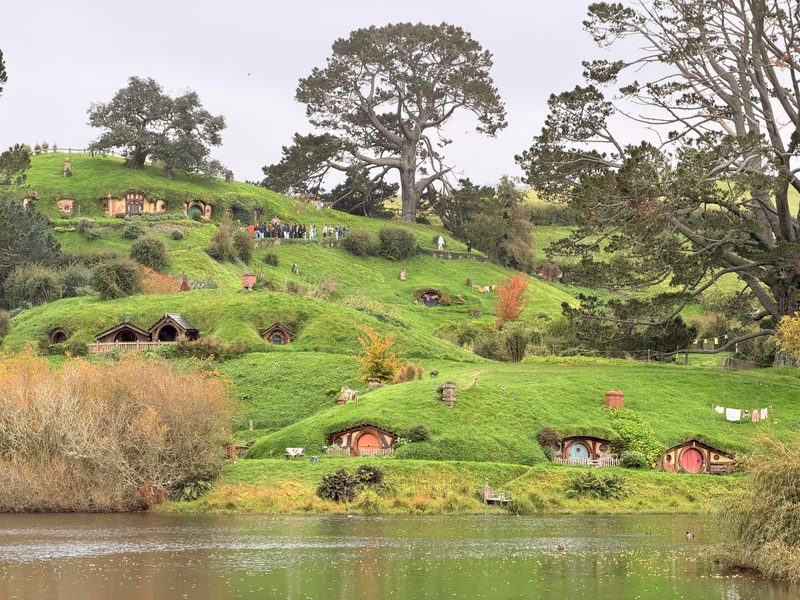
Agency level doesn't change admission standards, but it changes who picks up the phone to the school. With two cases.
A mother of two on why she chose New Zealand in the end, and how she decided who to trust.
 PODCAST
Three countries, one education
Melvin Wang, Jomel’s New Zealand High Court lawyer, on studying across three school systems before reading law here.
PODCAST
Three countries, one education
Melvin Wang, Jomel’s New Zealand High Court lawyer, on studying across three school systems before reading law here.Your child's age, temperament and English, and your family's time and budget. Everything we recommend afterwards follows from this.
Two or three specific options with the trade-offs of each, rather than a list to pick from.
The student and guardian visas are planned together, and in the right order. We check the evidence of funds first.
Airport pickup, housing, uniform, stationery, the parents' group. We're there for the week before term starts.
Most schools provide ESOL support, and where English falls short they arrange language classes first and phase the student into mainstream lessons. In practice younger children adjust faster; for a mid-secondary entry we'd assess the English first and, if needed, start preparing six to twelve months ahead.
The year begins in February and runs in four terms, with the summer holiday from mid-December. Starting in Term 1 and following the full year is ideal. Joining mid-year is possible, but we don't recommend it in Years 12 and 13, where it disrupts the accumulation of NCEA credits.
At primary level a parent or designated guardian is normally required. From secondary, a homestay or school boarding is an option. Whether to come is not only a rules question but a family one — we set out the cost, the visas and the practical reality of both so you can compare.
It can, but not automatically. What matters is whether the level and the programme qualify for a post-study work visa, and whether the graduate can then find work that meets the skilled residence conditions. That's why we look at the residence pathway while still choosing the school.
Tuition varies widely between state and private schools and by age, and living costs depend mostly on housing and region. At the proposal stage we give you an itemised estimate — tuition, living costs, visa fees and third-party costs — so you can compare it with anything else you're considering.
No pitch, no contract. Tell us your child's age, where they're studying now and where you'd like this to go, and we'll sketch a workable outline.
If another adviser already holds your case, or you have filed it yourself, please complete or formally end that engagement before contacting us — two parties on one application creates conflicting records and unclear responsibility.
For a full assessment → the form. Set out your family's situation once and the adviser can give a direction in their reply.
Just one or two questions → LINE is quicker. Remember to send a message after adding us, or we won't see it.
Education New Zealand accredited adviser
Unit G02/7 Rose Garden Lane, Albany, Auckland 0632
+64 (09) 421 0168 | info@jomelnz.com